

Buying new tires for your car or truck should be an exciting upgrade. However, looking at the long string of numbers printed on a tire sidewall often feels like reading a secret code. If you pick the wrong size, your new tires might rub against the inner fender or throw off your speedometer readings completely!
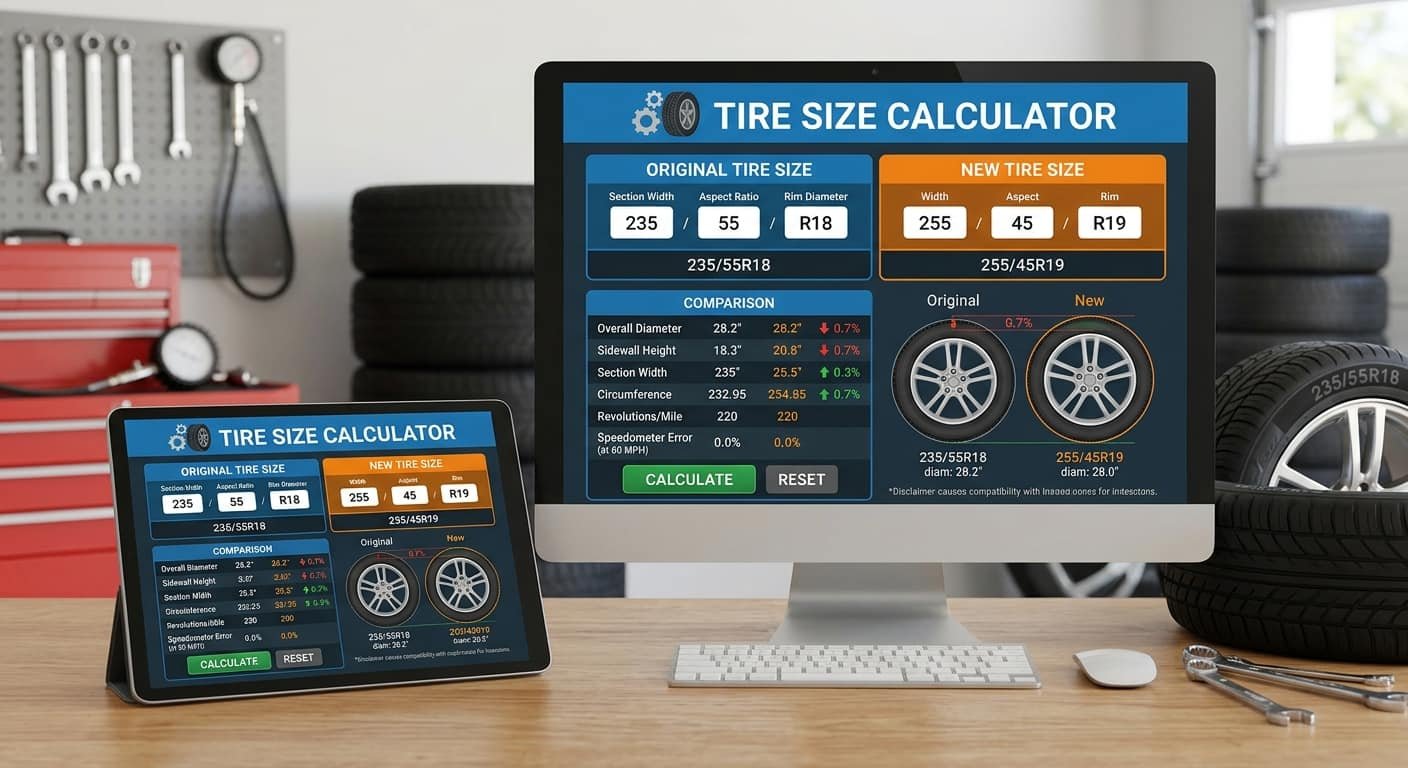
That is where a digital tire size calculator comes in handy. It takes those confusing sidewall numbers and translates them into simple inches or millimeters. You can compare your factory setup against larger or wider tires before spending a single dollar.
In this complete guide, we will break down how to read tire codes, explore specialized tools like a wheel tire size calculator, and look at truck-specific fits using a tacoma tire size calculator.
What Is a Tire Size Calculator and Why Do You Need One?
A tire size calculator is a smart online comparison tool. It lets you input your current tire numbers alongside a potential new tire size to see exact physical differences.
I learned the true value of these comparison tools the hard way years ago. I bought a set of aggressive off-road tires that looked amazing in the shop. But as soon as I turned into a tight parking spot at home, the rubber scraped loudly against the inner fender well!
Using a tire size calculator saves you from expensive mistakes like that. It calculates overall height, tread width, and sidewall thickness automatically so you know exactly what fits your vehicle safely.
Breaking Down the Numbers on Your Tire Sidewall
Before using a tire size calculator, you need to understand what those raised numbers on your sidewall actually stand for. A standard tire code looks like P265/70R16.
The first number (265) represents the tire width in millimeters from sidewall to sidewall. The second number (70) is the aspect ratio, meaning the sidewall height is 70% of the total width. The letter “R” stands for radial construction, and the final number (16) tells you the wheel rim diameter in inches.
P 265 / 70 R 16
│ │ │ └── Rim Diameter (Inches)
│ │ └──── Radial Construction
│ └─────── Aspect Ratio (Sidewall Height %)
└──────────── Section Width (Millimeters)
Plugging these numbers into a tire size calculator reveals the overall diameter of your tire in simple inches.
How Tire Size Changes Affect Speedometer Accuracy
When you change the overall height of your tires, your speedometer reading changes as well. Vehicles calculate your driving speed by counting wheel revolutions per minute.
If you mount taller tires, your wheels complete fewer full rotations per mile. This means your speedometer will actually read slower than your real driving speed!
[Taller Tire Installed] ──► [Fewer Revolutions Per Mile] ──► [Speedometer Reads 60 MPH]
│
▼
(Actual Speed: 63+ MPH!)
A good tire size calculator shows you the exact percentage difference in speedometer output. This helps you avoid unexpected speeding tickets on the highway by knowing your true driving speed.
Exploring the Utility of a Wheel Tire Size Calculator
While standard calculators focus mostly on rubber dimensions, a wheel tire size calculator goes a step further by including the rim itself.
Using a wheel tire size calculator allows you to input wheel width, rim diameter, and wheel offset. Offset measures how far forward or backward the wheel sits relative to the mounting hub.
If you swap to wider rims without checking clearance, your tires might hit suspension struts or stick out past your fenders. A combined wheel tire size calculator ensures both your rubber and your metal wheels work together seamlessly.
Using a Tacoma Tire Size Calculator for Truck Upgrades
Truck enthusiasts love modifying their rigs with lifts, leveling kits, and bigger rubber. Owners of Toyota trucks frequently rely on a specialized tacoma tire size calculator to plan popular upgrades like fitting 33-inch tires.
A tacoma tire size calculator helps truck owners figure out if a target tire size will rub on the body mount or front cab mount. It also shows if a suspension lift kit is required to clear aggressive tread patterns.
Whether you drive a light truck, an SUV, or a daily commuter car, using a truck-focused tacoma tire size calculator gives you clear visual confidence before modifying your ride.
Calculating Overall Tire Height Step by Step
You can actually check the math of a tire size calculator yourself using basic geometry! The math uses sidewall height and rim size to find the overall diameter.
To find sidewall height, multiply section width by aspect ratio:
SidewallHeight(mm)=SectionWidth(mm)AspectRatio100
Convert that result to inches by dividing by 25.4. Finally, add two sidewall heights (top and bottom) to the rim diameter:
OverallHeight(in)=2SidewallHeight(mm)25.4+RimDiameter(in)
A digital tire size calculator runs this formula instantly to save you time.
Metric vs Imperial Tire Sizes Explained
Tire dimensions generally come in two main styles: Metric (like 265/70R16) and Imperial/Flotation (like 31×10.50R15). Imperial sizes are direct: the first number is overall height, the second is width, and the third is rim size.
Converting between these two formats can be confusing when shopping across different brands. A reliable tire size calculator quickly translates metric codes into inches or vice versa.
This feature allows you to shop for off-road flotation tires even if your vehicle owner manual lists standard metric numbers.
Key Clearance Checks: Rubbing and Fender Space
Fitting larger tires requires more than just matching wheel sizes. You must consider inner fender clearance and suspension movement when turning.
A tire size calculator highlights changes in total width and radius. If your new choice is an inch wider, half that extra width moves closer to your inner steering links.
Always check full lock-to-lock steering turns after mounting test tires. This prevents unexpected rubbing when turning sharply into tight driveway spaces or parking spots.
Fuel Economy and Gear Ratio Considerations
Installing larger, heavier tires alters how your engine delivers power to the road. Taller tires effectively change your final drive gear ratio.
This shift means your engine works harder to accelerate from a stop, which can lower your city fuel economy. Conversely, highway cruising RPM might drop slightly on flat roads.
A tire size calculator helps you pick balanced sizes that preserve decent gas mileage while still giving your vehicle the aggressive look you want.
Step-by-Step: How to Use a Tire Calculator Correctly
Planning your upgrade is easy when following these simple steps:
- Locate your current tire code printed on your driver-side door jamb sticker.
- Enter these numbers as your baseline into a tire size calculator.
- Input your desired new tire size in the comparison box.
- Review key outputs: diameter difference, speedometer error, and sidewall height changes.
- Use a wheel tire size calculator if you are changing rim width or offset.
- Verify your numbers on a tacoma tire size calculator if working on custom truck lifts.
Following this simple routine prevents costly buying mistakes and ensures a smooth, quiet ride.
Frequently Asked Questions (FAQs)
1. How much larger can I go over stock tire size without rubbing?
For most standard vehicles, staying within a 3% change in overall diameter is safe. Going beyond 3% may require suspension lifts or fender trimming to prevent rubbing.
2. Can a tire size calculator tell me if my speedometer will be off?
Yes! A tire size calculator displays exact speedometer percentage errors. It shows how fast you are actually traveling compared to what your dashboard speedometer reads.
3. What is the difference between a standard calculator and a wheel tire size calculator?
A standard tool focuses on rubber tire dimensions. A wheel tire size calculator includes rim width, diameter, and wheel offset to check total wheel well fitment.
4. Why do truck owners use a tacoma tire size calculator specifically?
Toyota Tacoma trucks have specific wheel arch shapes and body mount positions. A tacoma tire size calculator caters to common off-road fitments and popular clearance limits.
5. Will bigger tires void my vehicle warranty or affect anti-lock brakes?
Extremely large tire changes can affect anti-lock brake calibration and traction control systems. Always check manufacturer recommendations before mounting non-standard sizes.
6. Do I need to re-calibrate my speedometer after changing tire sizes?
If your new tire size alters overall diameter by more than 2% to 3%, re-calibrating your vehicle computer ensures accurate speed readings and proper automatic gear shifts.
Conclusion
Using a tire size calculator is the absolute best way to plan custom wheel and rubber upgrades with total peace of mind. It takes the guesswork out of complex sidewall codes, prevents inner fender rubbing, and keeps your speedometer accurate. Whether you are daily commuting, shopping on a wheel tire size calculator, or building an off-road truck with a tacoma tire size calculator, running your numbers first ensures a perfect fit.Buying new tires for your car or truck should be an exciting upgrade. However, looking at the long string of numbers printed on a tire sidewall often feels like reading a secret code. If you pick the wrong size, your new tires might rub against the inner fender or throw off your speedometer readings completely!
That is where a digital tire size calculator comes in handy. It takes those confusing sidewall numbers and translates them into simple inches or millimeters. You can compare your factory setup against larger or wider tires before spending a single dollar.
In this complete guide, we will break down how to read tire codes, explore specialized tools like a wheel tire size calculator, and look at truck-specific fits using a tacoma tire size calculator.
What Is a Tire Size Calculator and Why Do You Need One?
A tire size calculator is a smart online comparison tool. It lets you input your current tire numbers alongside a potential new tire size to see exact physical differences.
I learned the true value of these comparison tools the hard way years ago. I bought a set of aggressive off-road tires that looked amazing in the shop. But as soon as I turned into a tight parking spot at home, the rubber scraped loudly against the inner fender well!
Using a tire size calculator saves you from expensive mistakes like that. It calculates overall height, tread width, and sidewall thickness automatically so you know exactly what fits your vehicle safely.
Breaking Down the Numbers on Your Tire Sidewall
Before using a tire size calculator, you need to understand what those raised numbers on your sidewall actually stand for. A standard tire code looks like P265/70R16.
The first number (265) represents the tire width in millimeters from sidewall to sidewall. The second number (70) is the aspect ratio, meaning the sidewall height is 70% of the total width. The letter “R” stands for radial construction, and the final number (16) tells you the wheel rim diameter in inches.
P 265 / 70 R 16
│ │ │ └── Rim Diameter (Inches)
│ │ └──── Radial Construction
│ └─────── Aspect Ratio (Sidewall Height %)
└──────────── Section Width (Millimeters)
Plugging these numbers into a tire size calculator reveals the overall diameter of your tire in simple inches.
How Tire Size Changes Affect Speedometer Accuracy
When you change the overall height of your tires, your speedometer reading changes as well. Vehicles calculate your driving speed by counting wheel revolutions per minute.
If you mount taller tires, your wheels complete fewer full rotations per mile. This means your speedometer will actually read slower than your real driving speed!
[Taller Tire Installed] ──► [Fewer Revolutions Per Mile] ──► [Speedometer Reads 60 MPH]
│
▼
(Actual Speed: 63+ MPH!)
A good tire size calculator shows you the exact percentage difference in speedometer output. This helps you avoid unexpected speeding tickets on the highway by knowing your true driving speed.
Exploring the Utility of a Wheel Tire Size Calculator
While standard calculators focus mostly on rubber dimensions, a wheel tire size calculator goes a step further by including the rim itself.
Using a wheel tire size calculator allows you to input wheel width, rim diameter, and wheel offset. Offset measures how far forward or backward the wheel sits relative to the mounting hub.
If you swap to wider rims without checking clearance, your tires might hit suspension struts or stick out past your fenders. A combined wheel tire size calculator ensures both your rubber and your metal wheels work together seamlessly.
Using a Tacoma Tire Size Calculator for Truck Upgrades
Truck enthusiasts love modifying their rigs with lifts, leveling kits, and bigger rubber. Owners of Toyota trucks frequently rely on a specialized tacoma tire size calculator to plan popular upgrades like fitting 33-inch tires.
A tacoma tire size calculator helps truck owners figure out if a target tire size will rub on the body mount or front cab mount. It also shows if a suspension lift kit is required to clear aggressive tread patterns.
Whether you drive a light truck, an SUV, or a daily commuter car, using a truck-focused tacoma tire size calculator gives you clear visual confidence before modifying your ride.
Calculating Overall Tire Height Step by Step
You can actually check the math of a tire size calculator yourself using basic geometry! The math uses sidewall height and rim size to find the overall diameter.
To find sidewall height, multiply section width by aspect ratio:
SidewallHeight(mm)=SectionWidth(mm)AspectRatio100
Convert that result to inches by dividing by 25.4. Finally, add two sidewall heights (top and bottom) to the rim diameter:
OverallHeight(in)=2SidewallHeight(mm)25.4+RimDiameter(in)
A digital tire size calculator runs this formula instantly to save you time.
Metric vs Imperial Tire Sizes Explained
Tire dimensions generally come in two main styles: Metric (like 265/70R16) and Imperial/Flotation (like 31×10.50R15). Imperial sizes are direct: the first number is overall height, the second is width, and the third is rim size.
Converting between these two formats can be confusing when shopping across different brands. A reliable tire size calculator quickly translates metric codes into inches or vice versa.
This feature allows you to shop for off-road flotation tires even if your vehicle owner manual lists standard metric numbers.
Key Clearance Checks: Rubbing and Fender Space
Fitting larger tires requires more than just matching wheel sizes. You must consider inner fender clearance and suspension movement when turning.
A tire size calculator highlights changes in total width and radius. If your new choice is an inch wider, half that extra width moves closer to your inner steering links.
Always check full lock-to-lock steering turns after mounting test tires. This prevents unexpected rubbing when turning sharply into tight driveway spaces or parking spots.
Fuel Economy and Gear Ratio Considerations
Installing larger, heavier tires alters how your engine delivers power to the road. Taller tires effectively change your final drive gear ratio.
This shift means your engine works harder to accelerate from a stop, which can lower your city fuel economy. Conversely, highway cruising RPM might drop slightly on flat roads.
A tire size calculator helps you pick balanced sizes that preserve decent gas mileage while still giving your vehicle the aggressive look you want.
Step-by-Step: How to Use a Tire Calculator Correctly
Planning your upgrade is easy when following these simple steps:
- Locate your current tire code printed on your driver-side door jamb sticker.
- Enter these numbers as your baseline into a tire size calculator.
- Input your desired new tire size in the comparison box.
- Review key outputs: diameter difference, speedometer error, and sidewall height changes.
- Use a wheel tire size calculator if you are changing rim width or offset.
- Verify your numbers on a tacoma tire size calculator if working on custom truck lifts.
Following this simple routine prevents costly buying mistakes and ensures a smooth, quiet ride.
Frequently Asked Questions (FAQs)
1. How much larger can I go over stock tire size without rubbing?
For most standard vehicles, staying within a 3% change in overall diameter is safe. Going beyond 3% may require suspension lifts or fender trimming to prevent rubbing.
2. Can a tire size calculator tell me if my speedometer will be off?
Yes! A tire size calculator displays exact speedometer percentage errors. It shows how fast you are actually traveling compared to what your dashboard speedometer reads.
3. What is the difference between a standard calculator and a wheel tire size calculator?
A standard tool focuses on rubber tire dimensions. A wheel tire size calculator includes rim width, diameter, and wheel offset to check total wheel well fitment.
4. Why do truck owners use a tacoma tire size calculator specifically?
Toyota Tacoma trucks have specific wheel arch shapes and body mount positions. A tacoma tire size calculator caters to common off-road fitments and popular clearance limits.
5. Will bigger tires void my vehicle warranty or affect anti-lock brakes?
Extremely large tire changes can affect anti-lock brake calibration and traction control systems. Always check manufacturer recommendations before mounting non-standard sizes.
6. Do I need to re-calibrate my speedometer after changing tire sizes?
If your new tire size alters overall diameter by more than 2% to 3%, re-calibrating your vehicle computer ensures accurate speed readings and proper automatic gear shifts.
Conclusion
Using a tire size calculator is the absolute best way to plan custom wheel and rubber upgrades with total peace of mind. It takes the guesswork out of complex sidewall codes, prevents inner fender rubbing, and keeps your speedometer accurate. Whether you are daily commuting, shopping on a wheel tire size calculator, or building an off-road truck with a tacoma tire size calculator, running your numbers first ensures a perfect fit.
Buying new tires for your car or truck should be an exciting upgrade. However, looking at the long string of numbers printed on a tire sidewall often feels like reading a secret code. If you pick the wrong size, your new tires might rub against the inner fender or throw off your speedometer readings completely!
That is where a digital tire size calculator comes in handy. It takes those confusing sidewall numbers and translates them into simple inches or millimeters. You can compare your factory setup against larger or wider tires before spending a single dollar.
In this complete guide, we will break down how to read tire codes, explore specialized tools like a wheel tire size calculator, and look at truck-specific fits using a tacoma tire size calculator.
What Is a Tire Size Calculator and Why Do You Need One?
A tire size calculator is a smart online comparison tool. It lets you input your current tire numbers alongside a potential new tire size to see exact physical differences.
I learned the true value of these comparison tools the hard way years ago. I bought a set of aggressive off-road tires that looked amazing in the shop. But as soon as I turned into a tight parking spot at home, the rubber scraped loudly against the inner fender well!
Using a tire size calculator saves you from expensive mistakes like that. It calculates overall height, tread width, and sidewall thickness automatically so you know exactly what fits your vehicle safely.
Breaking Down the Numbers on Your Tire Sidewall
Before using a tire size calculator, you need to understand what those raised numbers on your sidewall actually stand for. A standard tire code looks like P265/70R16.
The first number (265) represents the tire width in millimeters from sidewall to sidewall. The second number (70) is the aspect ratio, meaning the sidewall height is 70% of the total width. The letter “R” stands for radial construction, and the final number (16) tells you the wheel rim diameter in inches.
P 265 / 70 R 16
│ │ │ └── Rim Diameter (Inches)
│ │ └──── Radial Construction
│ └─────── Aspect Ratio (Sidewall Height %)
└──────────── Section Width (Millimeters)
Plugging these numbers into a tire size calculator reveals the overall diameter of your tire in simple inches.
How Tire Size Changes Affect Speedometer Accuracy
When you change the overall height of your tires, your speedometer reading changes as well. Vehicles calculate your driving speed by counting wheel revolutions per minute.
If you mount taller tires, your wheels complete fewer full rotations per mile. This means your speedometer will actually read slower than your real driving speed!
[Taller Tire Installed] ──► [Fewer Revolutions Per Mile] ──► [Speedometer Reads 60 MPH]
│
▼
(Actual Speed: 63+ MPH!)
A good tire size calculator shows you the exact percentage difference in speedometer output. This helps you avoid unexpected speeding tickets on the highway by knowing your true driving speed.
Exploring the Utility of a Wheel Tire Size Calculator
While standard calculators focus mostly on rubber dimensions, a wheel tire size calculator goes a step further by including the rim itself.
Using a wheel tire size calculator allows you to input wheel width, rim diameter, and wheel offset. Offset measures how far forward or backward the wheel sits relative to the mounting hub.
If you swap to wider rims without checking clearance, your tires might hit suspension struts or stick out past your fenders. A combined wheel tire size calculator ensures both your rubber and your metal wheels work together seamlessly.
Using a Tacoma Tire Size Calculator for Truck Upgrades
Truck enthusiasts love modifying their rigs with lifts, leveling kits, and bigger rubber. Owners of Toyota trucks frequently rely on a specialized tacoma tire size calculator to plan popular upgrades like fitting 33-inch tires.
A tacoma tire size calculator helps truck owners figure out if a target tire size will rub on the body mount or front cab mount. It also shows if a suspension lift kit is required to clear aggressive tread patterns.
Whether you drive a light truck, an SUV, or a daily commuter car, using a truck-focused tacoma tire size calculator gives you clear visual confidence before modifying your ride.
Calculating Overall Tire Height Step by Step
You can actually check the math of a tire size calculator yourself using basic geometry! The math uses sidewall height and rim size to find the overall diameter.
To find sidewall height, multiply section width by aspect ratio:
SidewallHeight(mm)=SectionWidth(mm)AspectRatio100
Convert that result to inches by dividing by 25.4. Finally, add two sidewall heights (top and bottom) to the rim diameter:
OverallHeight(in)=2SidewallHeight(mm)25.4+RimDiameter(in)
A digital tire size calculator runs this formula instantly to save you time.
Metric vs Imperial Tire Sizes Explained
Tire dimensions generally come in two main styles: Metric (like 265/70R16) and Imperial/Flotation (like 31×10.50R15). Imperial sizes are direct: the first number is overall height, the second is width, and the third is rim size.
Converting between these two formats can be confusing when shopping across different brands. A reliable tire size calculator quickly translates metric codes into inches or vice versa.
This feature allows you to shop for off-road flotation tires even if your vehicle owner manual lists standard metric numbers.
Key Clearance Checks: Rubbing and Fender Space
Fitting larger tires requires more than just matching wheel sizes. You must consider inner fender clearance and suspension movement when turning.
A tire size calculator highlights changes in total width and radius. If your new choice is an inch wider, half that extra width moves closer to your inner steering links.
Always check full lock-to-lock steering turns after mounting test tires. This prevents unexpected rubbing when turning sharply into tight driveway spaces or parking spots.
Fuel Economy and Gear Ratio Considerations
Installing larger, heavier tires alters how your engine delivers power to the road. Taller tires effectively change your final drive gear ratio.
This shift means your engine works harder to accelerate from a stop, which can lower your city fuel economy. Conversely, highway cruising RPM might drop slightly on flat roads.
A tire size calculator helps you pick balanced sizes that preserve decent gas mileage while still giving your vehicle the aggressive look you want.
Step-by-Step: How to Use a Tire Calculator Correctly
Planning your upgrade is easy when following these simple steps:
- Locate your current tire code printed on your driver-side door jamb sticker.
- Enter these numbers as your baseline into a tire size calculator.
- Input your desired new tire size in the comparison box.
- Review key outputs: diameter difference, speedometer error, and sidewall height changes.
- Use a wheel tire size calculator if you are changing rim width or offset.
- Verify your numbers on a tacoma tire size calculator if working on custom truck lifts.
Following this simple routine prevents costly buying mistakes and ensures a smooth, quiet ride.
Frequently Asked Questions (FAQs)
1. How much larger can I go over stock tire size without rubbing?
For most standard vehicles, staying within a 3% change in overall diameter is safe. Going beyond 3% may require suspension lifts or fender trimming to prevent rubbing.
2. Can a tire size calculator tell me if my speedometer will be off?
Yes! A tire size calculator displays exact speedometer percentage errors. It shows how fast you are actually traveling compared to what your dashboard speedometer reads.
3. What is the difference between a standard calculator and a wheel tire size calculator?
A standard tool focuses on rubber tire dimensions. A wheel tire size calculator includes rim width, diameter, and wheel offset to check total wheel well fitment.
4. Why do truck owners use a tacoma tire size calculator specifically?
Toyota Tacoma trucks have specific wheel arch shapes and body mount positions. A tacoma tire size calculator caters to common off-road fitments and popular clearance limits.
5. Will bigger tires void my vehicle warranty or affect anti-lock brakes?
Extremely large tire changes can affect anti-lock brake calibration and traction control systems. Always check manufacturer recommendations before mounting non-standard sizes.
6. Do I need to re-calibrate my speedometer after changing tire sizes?
If your new tire size alters overall diameter by more than 2% to 3%, re-calibrating your vehicle computer ensures accurate speed readings and proper automatic gear shifts.
Conclusion
Using a tire size calculator is the absolute best way to plan custom wheel and rubber upgrades with total peace of mind. It takes the guesswork out of complex sidewall codes, prevents inner fender rubbing, and keeps your speedometer accurate. Whether you are daily commuting, shopping on a wheel tire size calculator, or building an off-road truck with a tacoma tire size calculator, running your numbers first ensures a perfect fit.
