

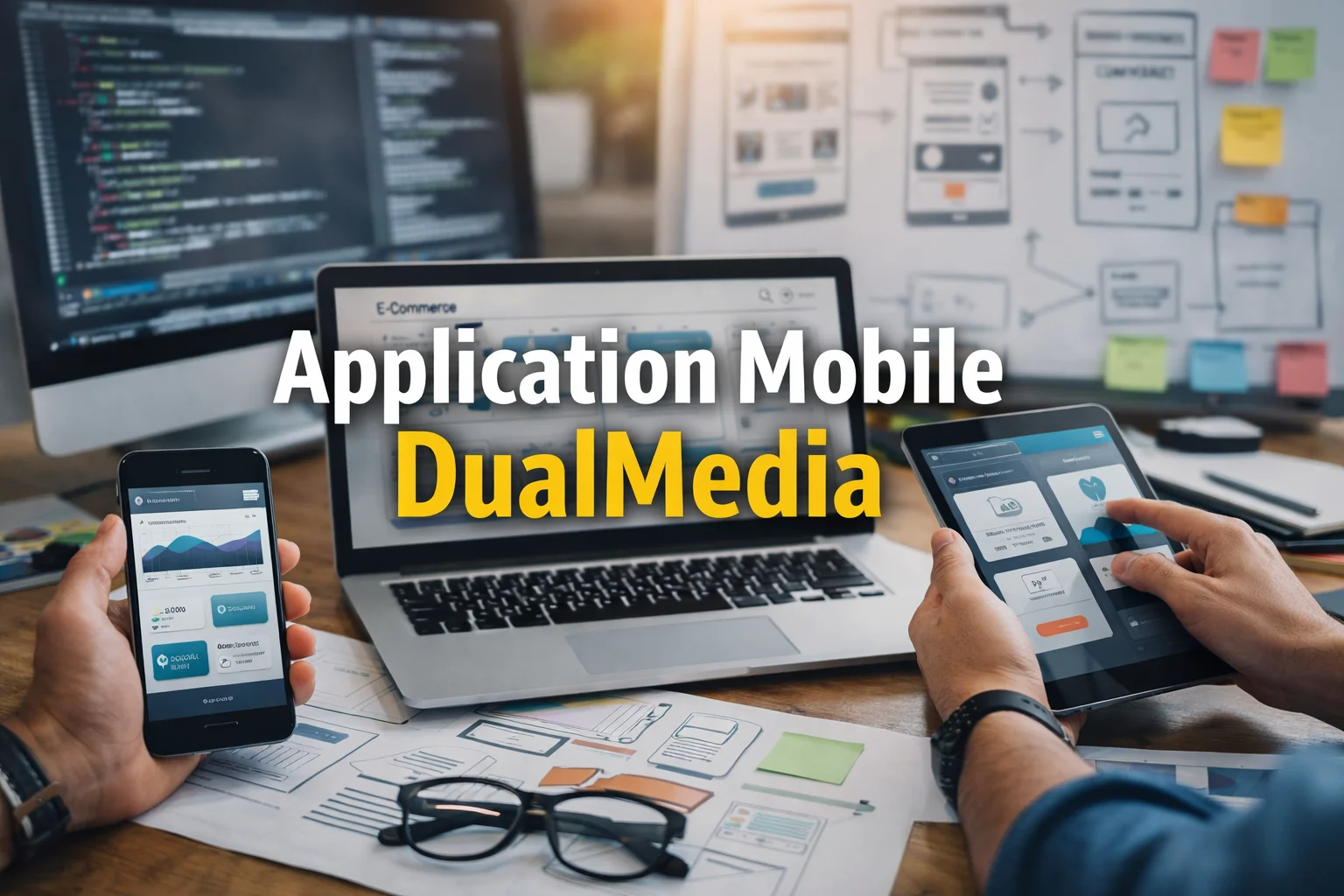
Introduction to Application Mobile Dualmedia
The concept of Application Mobile Dualmedia represents a significant evolution in the mobile application landscape. It is designed to merge two distinct media types—typically audio and visual—into a cohesive user experience. This innovative approach facilitates the integration of multimedia content, which can significantly enhance user engagement and interaction. By leveraging the capabilities of contemporary mobile devices, this application allows users to access diverse content forms in a seamless manner.
The primary purpose of the application mobile dualmedia is to enrich content delivery. Unlike traditional applications that may focus on text or singular media formats, dualmedia applications cater to users’ preferences for varied content types. For instance, a dualmedia application could simultaneously provide a rich audio commentary while displaying relevant visual elements, making it an invaluable tool for learning, entertainment, and information dissemination.
The significance of such applications cannot be overstated in today’s digital age, where multiple stimuli are employed to captivate audiences. The application mobile dualmedia not only streamlines the interaction process but also accommodates varied user preferences. Furthermore, it caters to a broader audience, enabling various demographic segments including younger and older users to benefit from the same application, as the integration of multiple media types supports diverse learning styles.
Operationally, application mobile dualmedia utilizes sophisticated software frameworks and protocols to synchronize various media elements. This process ensures that audio and visual components function harmoniously, providing a fluid experience that is visually engaging and audibly captivating. With continual advancements in mobile technology, the potential for dualmedia applications is vast, promising to further transform how content is created, shared, and consumed across mobile platforms.
Key Features of Application Mobile Dualmedia
The Application Mobile Dualmedia is designed to enhance user experience through a variety of essential features that cater to a broad array of needs. One primary characteristic is its robust multimedia integration capabilities. This allows users to seamlessly incorporate audio, video, and text, creating diverse content that engages audiences on multiple levels. For example, educational applications leveraging this feature can provide interactive lessons that include video demonstrations alongside textual explanations, significantly enhancing learning retention.
Another crucial aspect of the Application Mobile Dualmedia is its focus on user interactivity. By enabling features such as touch gestures, voice commands, and real-time feedback, users can interact with the application more intuitively. This interactivity increases user engagement and helps in creating a more immersive experience. Applications designed for fitness tracking often use these capabilities to allow users to track their progress interactively, making the process enjoyable and motivating.
Furthermore, the customizable interfaces of the Application Mobile Dualmedia stand out as a significant advantage. Users have the freedom to personalize their application layout according to their preferences, which enhances usability and satisfaction. For instance, a social media application utilizing these customization options allows users to arrange their feeds and notifications to suit their needs, fostering a more tailored experience.
Finally, compatibility with various devices is of utmost importance in today’s tech landscape. The Application Mobile Dualmedia is designed to function smoothly across multiple platforms, whether on smartphones, tablets, or desktop computers. This universality ensures that users can access their applications anytime and anywhere, promoting continuous engagement. Examples of successful applications harnessing these features include media streaming and e-commerce platforms that thrive on multimedia interaction, user customization, and cross-device functionality.
Benefits of Using Application Mobile Dualmedia
The integration of application mobile dualmedia in today’s digital landscape provides a multitude of benefits for both developers and users. One of the most significant advantages is enhanced user engagement. By combining various media formats, such as audio, video, and interactive content, applications can attract and retain users more effectively. This multifaceted approach not only enhances the user experience but also fosters a deeper connection between the user and the content, ultimately leading to increased satisfaction and loyalty.
Another key benefit of application mobile dualmedia is improved accessibility to information. With the capability to present content through multiple media channels, users can access information in their preferred format. For instance, individuals with visual impairments may benefit from audio descriptions, while others may prefer written content or multimedia presentations. This flexibility ensures that a broader audience can engage with the content, thereby expanding the reach and potential impact of the application.
Furthermore, the application mobile dualmedia opens the doors to innovative marketing strategies. Businesses can leverage the rich features of dualmedia applications to create memorable advertising experiences, including interactive advertisements that provide users with more than just static content. Case studies of successful businesses reveal that those who have adopted this technology see marked improvements in customer interactions, engagement rates, and, ultimately, conversion. For example, a prominent retail brand utilized application mobile dualmedia to launch a campaign that allowed users to visualize products in augmented reality, resulting in a substantial increase in sales.
Overall, the application mobile dualmedia offers significant advantages that can elevate the way developers create user-centric experiences while also empowering users through enhanced access and engagement with information.
Future Trends in Application Mobile Dualmedia
The landscape of dualmedia mobile applications is evolving rapidly, driven by technological innovation and changing user preferences. As we look towards the future, several key trends are poised to shape the development and functionality of these applications. First and foremost, advancements in artificial intelligence (AI) and machine learning will significantly enhance the capability of application mobile dualmedia. These technologies can personalize user experiences by analyzing behavior patterns and preferences, allowing applications to offer tailored content and functionality.
application mobile dualmedia Another important trend is the increasing integration of augmented reality (AR) and virtual reality (VR) within dualmedia applications. This integration aims to create more immersive experiences for users, blending the physical and digital worlds. Expectations suggest that application mobile dualmedia incorporating AR and VR will become mainstream, particularly in fields such as gaming, education, and retail. This shift will necessitate the development of more sophisticated technological infrastructures to support seamless interactivity and performance.
Moreover, the growing emphasis on privacy and data protection will likely influence the evolution of dualmedia applications. As users become increasingly aware of their digital footprints, application developers will be challenged to create solutions that prioritize user consent and data security. This requirement may lead to the implementation of innovative security measures within the application mobile dualmedia sphere, ensuring user trust is maintained.
Lastly, the demand for cross-platform compatibility will continue to rise. Users seek applications that function smoothly across various devices and operating systems. Future dualmedia applications will need to adopt responsive design principles to accommodate diverse user environments effectively. By focusing on these emerging trends, developers can navigate the complexities of the dualmedia landscape, positioning themselves for success in a competitive market.
