
Have you ever heard stories about giant blocks of orange cheese that could melt over anything? If you grew up in the 1980s, you likely know exactly what I am talking about. Government cheese is more than just a food item; it is a major piece of American history. It started as a way to help farmers and ended up becoming a cultural icon. Today, people talk about it in music, movies, and even on the news. In this article, we will dive deep into where it came from, why it was stored in giant caves, and why it is trending again on Apple TV.
Many people remember the heavy five-pound blocks arriving in simple cardboard boxes. It was a staple for families who needed a little extra help during tough times. While it was technically a “processed” product, many folks swear it was the best melting cheese they ever had. Whether you are curious about the government cheese caves or the new TV series, there is so much to learn about this salty, smooth, and legendary dairy product that fed millions of people.
What Exactly Was Government Cheese?
To put it simply, government cheese was a processed dairy product given to people in need. The United States government bought a lot of milk from farmers to keep prices steady. When they had too much milk, they turned it into cheese because it lasts longer. This cheese was then given to seniors, low-income families, and schools. It wasn’t something you could buy at a normal grocery store. It was a special gift from the “Commodity Credit Corporation” to ensure no one went hungry while dairy prices stayed fair for farmers.
The Secret of the Government Cheese Caves
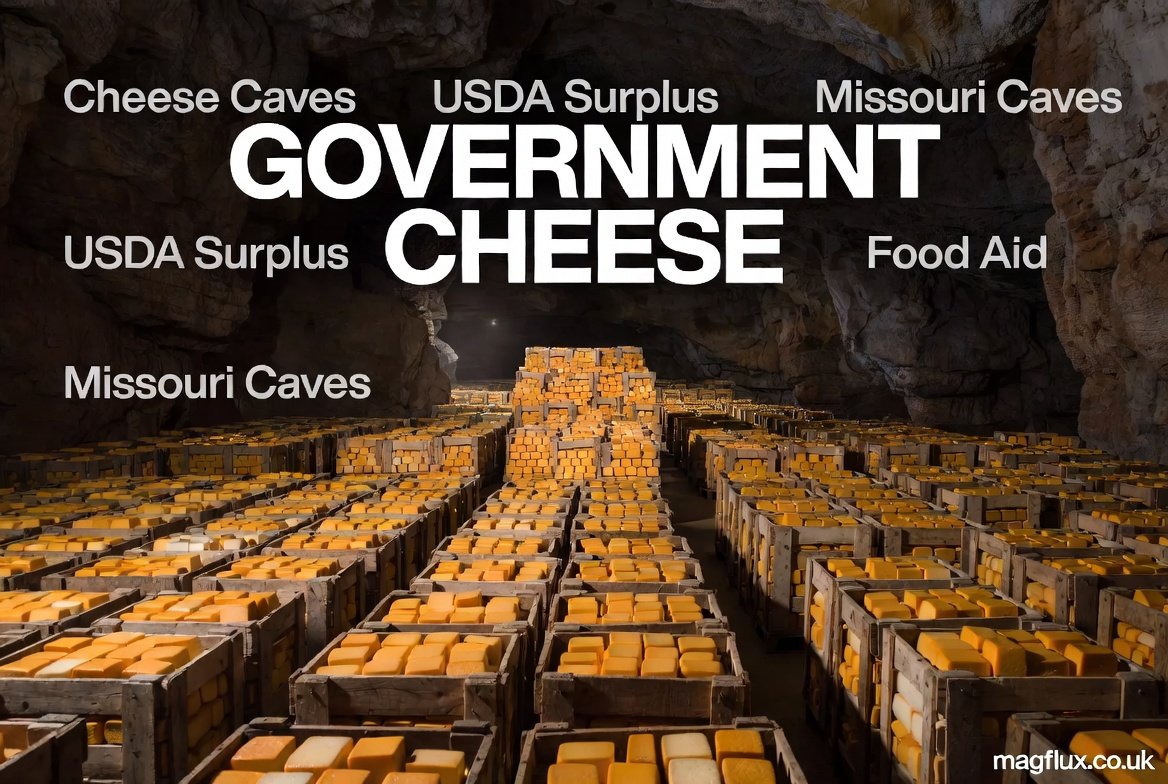
Did you know there are massive tunnels filled with food right under our feet? The government cheese caves are actually old limestone mines located in Springfield, Missouri. These “caves” are perfect for storage because they stay cool all year long without costing a lot of money for air conditioning. At one point, the government had over 500 million pounds of cheese tucked away in these dark, cold tunnels. It sounds like something out of a movie, but it is a very real part of how the U.S. manages its food supply.
Why Missouri Became the Cheese Capital
You might wonder why Missouri was chosen for the government cheese cave system. The state has a unique geology with many deep limestone quarries. These spaces are huge—some are like underground cities! When the government needed a place to put millions of pounds of dairy, these mines were the perfect fit. They provide a steady temperature that keeps the cheese from spoiling too quickly. Even today, private companies still use these same Missouri tunnels to store food products, continuing the legacy of the famous underground stockpiles.
The 1981 Distribution Boom
In 1981, President Ronald Reagan decided it was time to move the cheese out of storage and onto dinner tables. The government was spending a million dollars a day just to keep it cold! To stop the waste, they started the “Temporary Emergency Food Assistance Program.” This led to the famous lines where people waited to get their five-pound blocks. For many, this was a life-saver during a time when the economy was struggling. It became a symbol of the community coming together to share resources.
How the Cheese Was Actually Made
If you look at the ingredients, government cheese is very similar to the American cheese slices you find today. It was made by blending different types of cheese like Cheddar and Colby. Makers added “emulsifiers” to help it stay smooth when it gets hot. This is why it was so famous for making the perfect grilled cheese or mac and cheese. It didn’t separate or get oily like some fancy cheeses do. It was designed to be simple, filling, and very easy to cook with for busy families.
Government Cheese Apple TV Series
The legend has now moved from the kitchen to the screen with the Government Cheese Apple TV show. Starring David Oyelowo, this series is a “surrealist” comedy that takes place in the late 1960s. It follows a man named Hampton Chambers who is trying to rebuild his life after getting out of prison. The title uses the cheese as a symbol for the “American Dream” and the struggles of everyday people. It has brought the term back into the spotlight for a whole new generation of viewers.
Cultural Impact and Modern Memories
For many people, the mention of this dairy product brings back strong emotions. In the world of hip-hop and art, performers often mention it to show they remember where they came from. It represents a “started from the bottom” story. While some look back at it as a sign of hard times, others have very fond memories of the taste. It has become a piece of “Americana,” much like old-fashioned soda bottles or classic cars. It reminds us of a specific era in history.
Is There Still a Cheese Surplus Today?
Believe it or not, the “cheese cave” story isn’t just ancient history. While the government doesn’t give out the same orange blocks anymore, the U.S. still has a massive amount of dairy in storage. As of recently, there are over 1.4 billion pounds of cheese in cold storage across the country! Most of this is now owned by private companies, but the government cheese cave in Missouri remains a symbol of how we handle extra food. We still produce more milk than we drink, so the “cheese mountain” keeps growing.
Cooking with the Legend: Recipe Vibes
If you could get your hands on a block today, what would you make? Most people remember it as the ultimate ingredient for a “poor man’s feast.” Because it was so salty and creamy, it didn’t need much extra seasoning. You could shred it over potatoes, melt it into a thick soup, or just eat a slice on its own. It was a versatile tool in the kitchen that helped parents stretch their grocery budgets during the long winter months.
Why We Still Talk About It
We still talk about government cheese because it represents a unique intersection of politics, farming, and daily life. It shows how the government tries to balance the needs of farmers with the needs of hungry citizens. Whether we are watching the Government Cheese Apple TV show or reading about underground mines, the story fascinates us. It is a reminder that even something as simple as a block of cheese can have a huge impact on the history of a nation.
Conclusion
In the end, government cheese is much more than just a processed food. It is a story about big ideas, giant government cheese caves, and the families who relied on it. It taught us about how the government handles surpluses and how communities survive tough times. Even if you never tasted a block yourself, its legacy lives on in our culture and on our TV screens. Next time you see a grilled cheese sandwich, think about the famous orange blocks that once fed a nation!
FAQs
1. Can you still buy government cheese today?
No, you cannot buy the original version in stores. It was a government-distributed commodity. However, modern “American Processed Cheese” is very similar in taste and texture.
2. Where is the biggest government cheese cave?
The most famous storage site is the Springfield Underground in Missouri. It is a massive former limestone mine that provides natural refrigeration for millions of pounds of food.
3. What does the Apple TV show “Government Cheese” talk about?
The Government Cheese Apple TV show is a dramedy about a man named Hampton Chambers. It explores themes of family, redemption, and the struggle to achieve the American dream in the 1960s.
4. Why did the government have so much extra cheese?
The government bought extra milk from farmers to keep milk prices high enough for farmers to stay in business. They turned that milk into cheese so it wouldn’t spoil.
5. Is government cheese healthy to eat?
It is a good source of protein and calcium, but it is also very high in sodium and saturated fat. Like most processed foods, it is best enjoyed in moderation.
6. Was the cheese actually kept in “real” natural caves?
Not exactly. They are “man-made” caves created by mining limestone. These underground warehouses are much more organized and cleaner than a natural damp cave.
References:
- U.S. Department of Agriculture (USDA) – History of Commodity Distribution.
- National Archives – The Reagan Era and the TEFAP Program.
- Apple TV+ Press Room – “Government Cheese” Series Details.
