

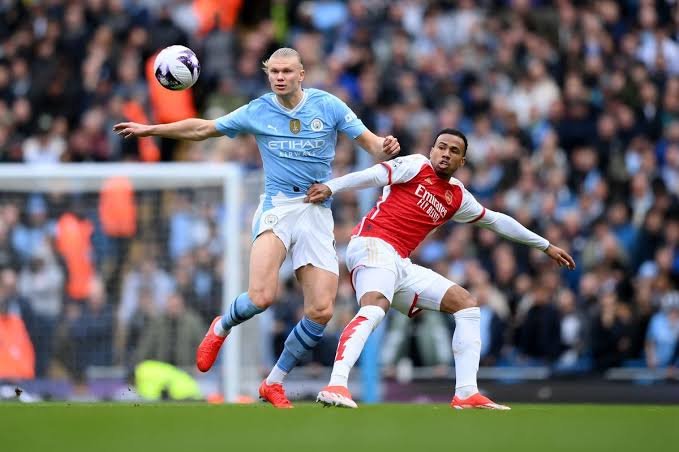
Navigating the financial architecture of football forecasting requires a clinical rejection of mainstream media hype, which naturally over-indexes on high-profile, brand-heavy heavyweights. In the context of Spanish football, the vast majority of public capital historically flowed toward the top tier, causing the closing lines for smaller, lower-tier clubs to drift into deeply inefficient territory. The historic 2013/2014 La Liga campaign provides an exceptional data matrix for isolating these specific market distortions. By breaking down the underlying performance metrics of that season’s lesser-known overachievers, sharp analysts can learn to identify the precise structural indicators—such as low-block conversion metrics, localized home-field variance, and tactical discipline—that turn unheralded relegation-fighters into highly profitable backing positions.
Why Backing Structurally Sound Lower-Tier Clubs Is Logically Defensible
The primary mathematical justification for focusing on lower-tier sides in Spanish football stems from the systemic public mispricing of the handicap lines. Bookmakers are forced to balance their books based on the emotional weight of money from casual fans, who habitually back famous teams to cover large goal spreads. This behavioral bias naturally deflates the price of the underdog, providing an artificial cushion or “overlay” for data-driven bettors. When a defensively organized lower-tier club operates with a clear, counter-attacking blueprint, its probability of covering a +1.5 or +2.0 Asian Handicap is significantly higher than the public closing line reflects, resulting in a sustainable long-term mathematical edge.
How Market Blind Spots Manifested Across the 2013/2014 League Table
The divergence between raw public ufabet ทางเข้า and pitch reality was never more pronounced than during the mid-season phase of the 2013/2014 campaign. While the general public expected the bottom half of the table to be consistently blown out by top-heavy attacks, several small clubs engineered highly resilient tactical setups that generated an exceptional return on investment for their backers.
| Lower-Tier Club | Primary Tactical Paradigm | Average Home Shot Suppression | Expected Goal Over-Performance | Market Value Status |
| Levante UD | Hyper-dense low block; minimal transition width | 11.2 shots conceded per game | +0.42 xG differential at home | Consistently undervalued away |
| Elche CF | Rigid positional mid-press; zonal containment | 12.5 shots conceded per game | +0.28 xG differential vs. top six | Premium handicap value |
| Rayo Vallecano | High-risk vertical press; suicidal defensive line | 17.8 shots conceded per game | -0.54 xG differential overall | Severe value liability |
The performance breakdown presented in the matrix above underscores the necessity of parsing individual club philosophies rather than grouping all underdogs under a single generic label. Levante UD’s hyper-dense defensive block made them an incredibly sturdy asset when playing as a deep away underdog, as their system was custom-built to minimize the premium space elite playmakers required to create clear-cut chances. Conversely, Rayo Vallecano’s aggressive, open style represented an absolute mathematical hazard, proving that a smaller club trying to match top-tier clubs in open transition will experience massive defensive degradation, destroying their viability as a betting asset.
Deconstructing the Mechanical Triggers That Maintained Levante’s Defensive Overlay
Isolating the specific parameters that allowed a club like Levante to over-perform its market price requires looking past basic win-loss columns and analyzing how they controlled the absolute quality of opposing attempts. Under Joaquin Caparros, Levante purposefully surrendered generic possession, frequently maintaining less than 35% of the ball, which led casual observers to believe they were being completely dominated.
The Dynamics of Forcing Low-Probability Perimeter Attempts
By heavily packing the central channels within the penalty box, Levante forced elite opponents to circulate the ball laterally along the perimeter of the defensive block. This spatial restriction resulted in a high volume of low-probability long-range shots from outside the eighteen-yard box, which inflated the opponent’s raw shot count while keeping the true expected goals (xG) metric remarkably low, preserving Levante’s handicap coverage.
The Psychological Breakdown of Frustrated Away Favorites
When a high-scoring favorite traveled to the Estadi Ciutat de Valencia and failed to break through the low block in the opening thirty minutes, their defensive lines would naturally creep forward to force the issue. This tactical impatience played directly into Levante’s hands, allowing their isolated transition forwards to exploit the massive space behind the opponent’s high line, frequently securing a low-scoring draw or a narrow 1-0 upset that completely crushed the market’s spread expectations.
Formulating a Sequential Filtering Checklist to Isolate High-Yield Underdogs
To replicate the success of identifying these high-value underdogs in modern applications, an analyst must execute a structured, step-by-step filtration process that separates variance from sustainable tactical efficiency. The procedural pipeline outlined below provides an objective roadmap designed to isolate small clubs that possess the structural capacity to defy bookmaker spreads.
1.Identify Extreme Closing Line Deviations:Phase 1: Spread Inversion.
Scan the upcoming fixture schedule to isolate matches where a lower-tier side is getting a handicap spread of +1.75 or higher, indicating a heavy public bias toward the favorite.
2.Measure Penalty Box Shot Density:Phase 2: Spatial Audit.
Query your database to track the percentage of opponent shots allowed from central areas inside the box over the last five matches, filtering out teams that concede high-probability central chances.
3.Evaluate Counter-Attacking Directness:Phase 3: Transition Velocity.
Calculate the team’s forward pass ratio in transition states to confirm they can transition from defense to offense within three passes, ensuring they pose a legitimate threat on the counter.
4.Execute Fractional Allocation Selection:Phase 4: Risk Calibration.
Deploy capital exclusively on underdogs that pass all three prior phases, using a disciplined fractional unit sizing to absorb the inherent volatility of backing low-possession sides.
Interpretation of the Underdog Isolation Protocol Results
Following this precise sequential framework prevents an analyst from falling victim to the aesthetic illusion of dominant football. The pipeline ensures that capital is directed strictly toward disciplined, defensive units that understand how to compress space, completely ignoring media narratives about which teams are “in crisis” or “playing beautiful soccer.” This rigorous filtration transforms underdog backing from a speculative, high-risk gamble into a cold, systematic numbers exercise designed to exploit the public’s predictable over-estimation of elite attacking clubs.
Evaluating the Situational Elements That Strengthen Underdog Viability
The predictive validity of a low-block underdog model increases significantly when applied to matches played during periods of intense scheduling congestion, such as mid-week rounds or immediately following European cup fixtures. When a top-tier club is forced to rotate its starting lineup due to physical fatigue, its internal passing chemistry drops, reducing its capacity to dismantle an organized defensive structure. Under these precise situational conditions, the lower-tier side—operating with full rest and a singular tactical focus—possesses an elevated probability of frustrating the favorite, maximizing the mathematical edge of the handicap line.
Observing how these localized edges develop over a full season provides critical insights into modern line movement, which can be easily tracked across contemporary digital sports networks. Serious researchers who study these historical patterns understand that line value fluctuates rapidly based on late-breaking squad rotation news. When utilizing a highly efficient online betting site to monitor live capital flows, recognizing the exact moments where public money artificially inflates the price of a fatigued favorite allows an analyst to lock in premium handicap lines on the underdog before the sharp syndicates execute their corrections.
Where and Why the Underdog Backing Concept Breaks Down Completely
The mathematical integrity of backing smaller clubs collapses entirely when an analyst attempts to apply the low-block theory to lower-tier squads that possess severe deficits in aerial defensive capability. If a small club is structurally incapable of defending set-pieces or crosses into the box, their ground-level low block becomes completely irrelevant. Elite teams will easily bypass the compact central midfield channels by utilizing high-volume cross matrices, exploiting the underdog’s physical vulnerabilities and generating rapid, multi-goal leads that immediately destroy the value of a +1.5 spread.
Navigating these subtle structural flaws requires an objective, clinical approach to data interpretation, completely free from the emotional desire to see an underdog succeed. Individuals who analyze sports risk with the same calculating detachment that professionals apply when engaging with advanced digital interfaces—such as the high-turnover gaming models found on a premier casino online website—realize that data integrity is the only shield against bankroll erosion. Treating a sports market with the same disciplined probability controls as a randomized numbers game ensures that capital is withheld the moment a team’s aerial vulnerability matches the opponent’s stylistic strengths, protecting the portfolio from predictable tail-risk events.
Summary
Analyzing the lower-tier clubs of the 2013/2014 La Liga season proves that substantial betting value is consistently generated by backing small, defensively disciplined squads that are systematically mispriced by public sentiment. Teams like Levante UD and Elche CF demonstrated that low-possession, compact defensive structures can compress pitch geometry so effectively that elite attacking units are forced into low-probability perimeter shots, consistently covering deflated handicap lines. By utilizing structured filtering sequences and monitoring situational catalysts like opponent fatigue, analysts can successfully isolate profitable overlay margins. Ultimately, long-term predictive success depends on completely ignoring institutional brand names and focusing exclusively on the mathematical processes that govern spatial control and defensive efficiency.
